
Beloved – it’s extremely important to realize that disciplemaking cannot happen outside a groupsetting. This is a critical factor in any effective discipling process. Wherever a disciplemaker tries to disciple a follower on an individual basis the outcomes will be shallow – it may result in a little spiritual growth but the real purpose of disciplemaking – the realization of the Kingdom of God – the holistic transformation of society to look like the will of God – will not be reached.
The first thing that Jesus did after calling His disciples was to put them into a group – characters totally different from one another – broken people (like all of us) from vastly different temperaments and spiritualities. People on a mission – to transform the world – a groupsetting can be the vehicle to transform them into the character of Jesus – the fruit of the Spirit – to equip them for their calling of bringing heaven down to earth.
In order for this character transformation to happen we need to live completely transparently with a group of people. In stead of our tendency to live individualistically – radical transparentness on even very sensitive issues is needed. I don’t follow Jesus by myself – that is why He taught us not to pray “my Father’ but “our Father. The church operates as a body where the different parts are accountable to one another – responsible for one another – also to take spiritual responsibility for one another. This total transparency makes it possible to keep a close eye on the dark places in each other’s lives. We need to be real with one another? No masks, no pretension, no hidden corners.
A disciple who has the privilege of living in such a groupsetting writes : “We made it our goal to not allow dark areas to defeat us. We would often ask each other questions such as, “Did you spend your time with purpose?” and “Did you sin in pornography?” The dark areas shrank, and we struggled with them less. We experienced victory because we brought them into the light; before each other and before Jesus. The most difficult areas to expose are usually related to money, sex or power, so if you don’t know where to start, start there!”
Fact is that we do not know ourselves – do not know the gap between how we are and what we can be – seldom totally honest with ourselves about our deepest desires and motivations. We do not know what we do not know.
The viewpoint that we need others to get a clear perspective on ourselves is proved by the so-called “JOHARI-WINDOW”.
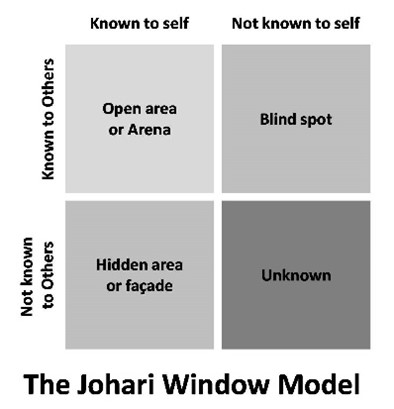
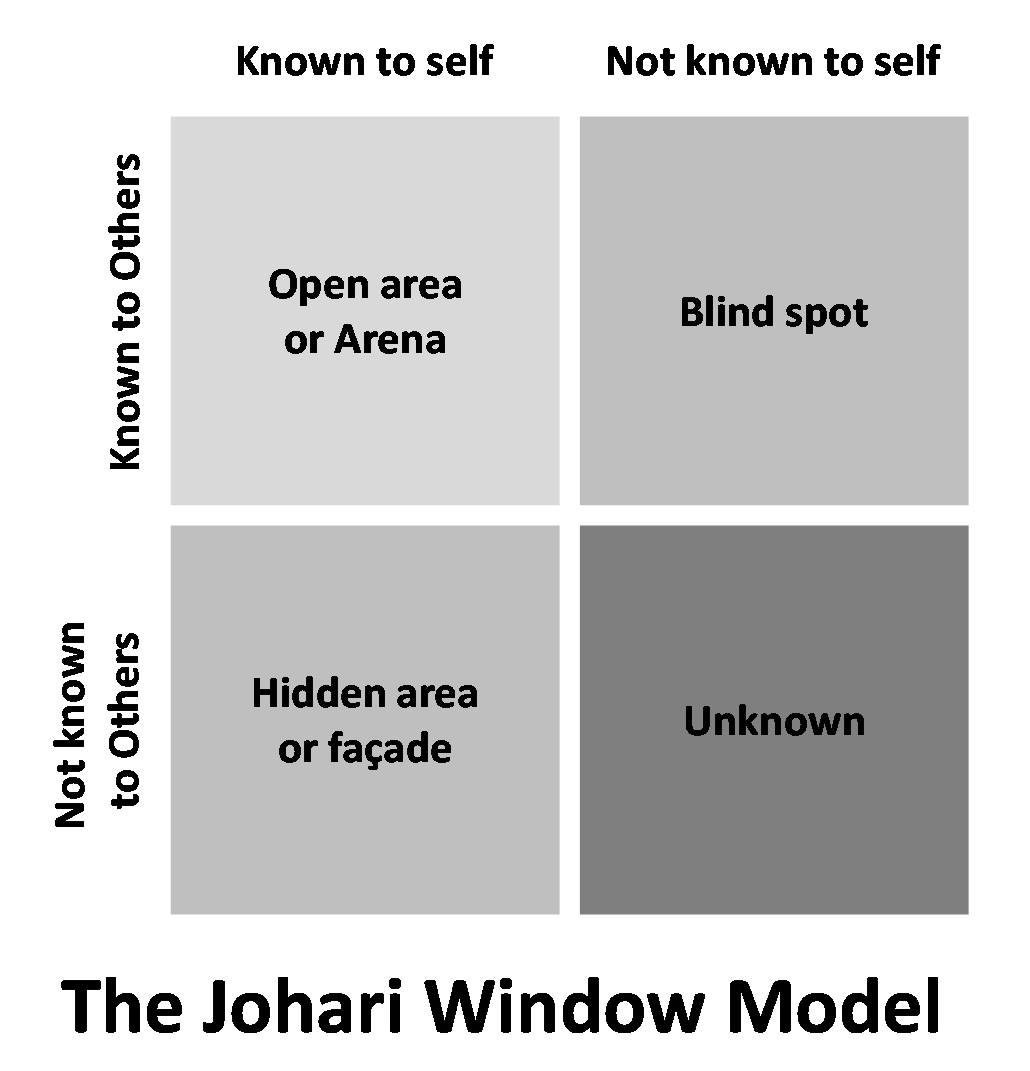
1. Open/self-area or arena – Here the information about the person his attitudes, behaviour, emotions, feelings, skills and views will be known by the person as well as by others.
2. Blind self or blind spot – Information about yourselves that others know in a group but you will be unaware of it. Others may interpret yourselves differently than you expect. The blind spot is reduced through seeking feedback from others.
3. Hidden area or façade – Information that is known to you but will be kept unknown from others. . This includes feelings, past experiences, fears, secrets etc.
4. Unknown area – The Information which are unaware to yourselves as well as others. This includes the information, feelings, capabilities, talents etc. The person will be unaware till he discovers his hidden qualities and capabilities or through observation of others.
The real question is about the quality of our koinonia – the level of our fellowship. Reading the New Testament it is apparent that the first Christians were prepared to connect on a very deep level – especially also of sharing whatever material possessions they had. The statements Paul, Peter and the other apostles offered Christians sometimes make you shrink. Jesus had some very harsh words for church leaders. The motive always was the correction of behaviour – to be saved from sin that had the potential to destroy the individual. The question for us is : Do we love one another enough to be honest with one another?
Wherever people give themselves into others’ hands – with the request. “Please take responsibility for me. I do not know myself. Please speak into my life” – a group can be the catalyst for major character formation.
Can I give myself totally into the hands of my brothers and sisters? Can I say no to the temptation of living for myself and by myself?
Can I take responsibility for others – in the name of Jesus – and properly care for them?
Are we courageous enough?
Johann Theron